Endoscopic Brow Lift
Gangnam Unni review · February 2024
I consulted Dr. Jung Su Lee at UVOM about a brow lift and had the surgery. He is so well known in this field that I trusted him, booked as soon as I arrived, and went ahead with surgery.
When lowered eyebrows and forehead tissue make the eyes look heavy or hooded, this operation uses an endoscope through small incisions within the hair-bearing scalp to lift the eyebrows and forehead back into position.
When the eyes look droopy, people usually first consider double-eyelid surgery or removal of sagging eyelid skin. Traditional forehead lifting used a long incision across the scalp from ear to ear; more recently, threads have also been used for lifting.
If the heavy appearance is caused by lowered eyebrows rather than the eyelids, removing eyelid skin may leave it unresolved. The eye-to-brow distance may even become shorter, creating a harsher expression.
A long scalp incision carries a greater burden of scarring and recovery. Thread lifting cannot release the ligaments firmly anchoring the outer brow, limiting its effect.
A few small incisions are made within the hair-bearing scalp. An endoscope is inserted, and surgery proceeds under video visualization. The muscles that pull the eyebrows downward are weakened, and the ligaments anchoring the outer brow are released. Forehead tissue is then moved upward and secured to bone.
Before surgery, the cause of the heavy appearance is distinguished: lowered eyebrows, excess eyelid skin, or weak eye-opening muscles require different operations.
Small incisions within the hair-bearing scalp make scars less noticeable. Magnified visualization helps avoid nerves and blood vessels and can reduce bleeding and swelling. Reducing the downward pull on the eyebrows favors maintenance of the lifted position, while forehead lines also improve.
This operation does not enlarge the eyes themselves. Excessive brow elevation can create a surprised appearance, so the amount of lift is selected to suit facial proportions. Reduced sensation, hair loss around the incisions, and asymmetry can occur, and the brows may partially descend again over time.
With aging, eyebrow and forehead tissues descend under gravity. Eyelid drooping looks more pronounced, and the shorter distance between the eyes and brows produces a heavy, harsher appearance.
Using the forehead muscle to raise the brows and improve an obstructed visual field is called compensatory brow elevation. It fatigues the forehead muscle and creates lines. Correcting brow position reduces unnecessary compensation and also improves forehead lines.
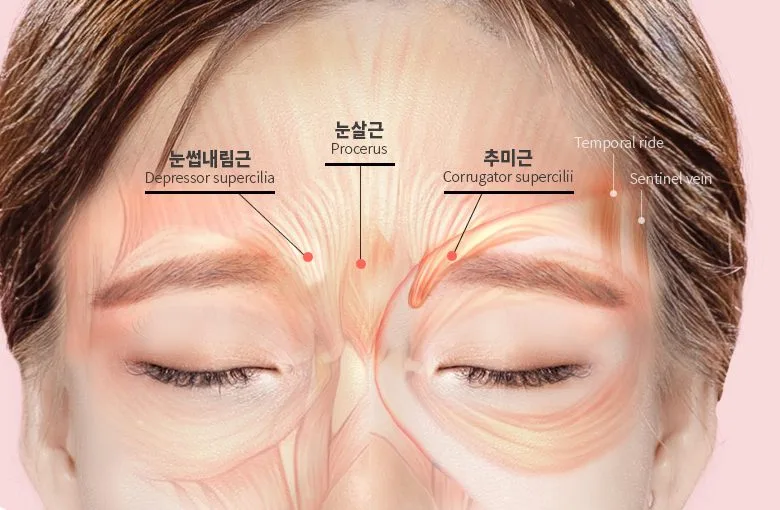
The corrugator supercilii, used when protecting the eyes from sunlight, pulls the brows inward and downward to create vertical lines. The depressor supercilii lowers the brows, while the procerus pulls down the skin between them, creating a stern expression. The medial part of the orbicularis oculi draws the inner brow downward.
Resecting or dividing these four muscles to limit their action, while preserving frontalis function, leaves a weaker downward force and relatively stronger lifting force even as the forehead and eyebrows age. This upward balance, which helps maintain the lifted position, is an advantage of the operation.
All four techniques begin with approximately 1.5~2 cm scalp incisions above the hairline, followed by dissection under FULL HD endoscopic visualization to avoid nerves and blood vessels, then fixation of the periosteum and muscle to bone with absorbable sutures. The structure treated in the third step differs.
The muscles that pull the eyebrows downward are divided. Dividing or resecting the four muscles adjusts brow position and improves frown lines.
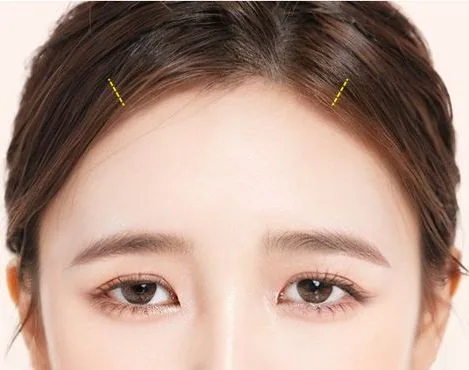
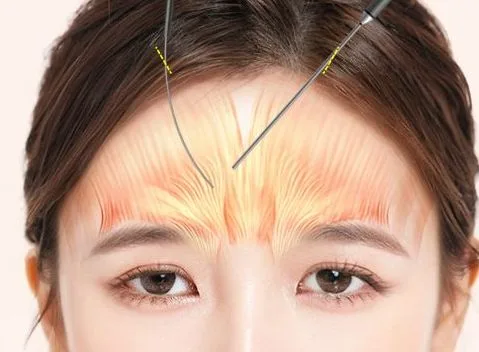
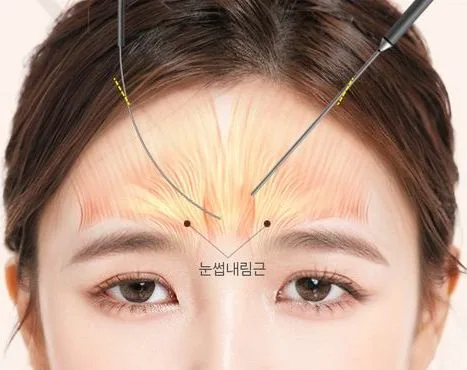

Thick, broad ligaments at the outer brow hold the tissue in place. Their strong restraint explains why pulling brow skin with threads has a limited effect. Releasing this area allows the eyebrow to move upward.
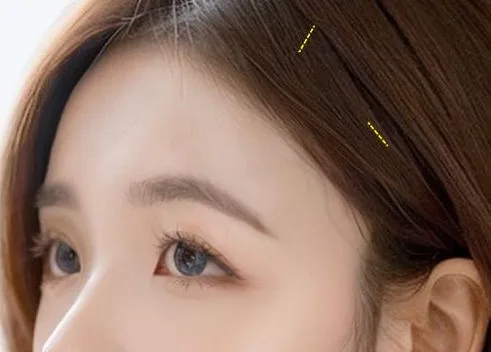
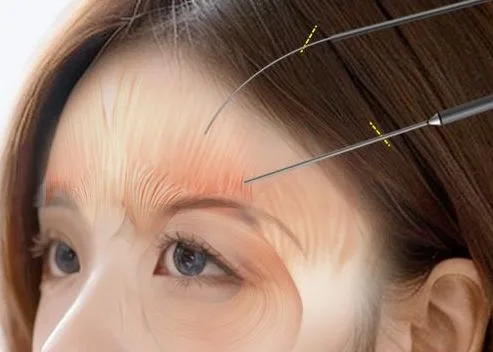
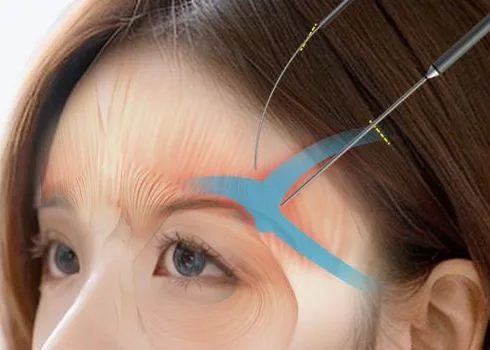
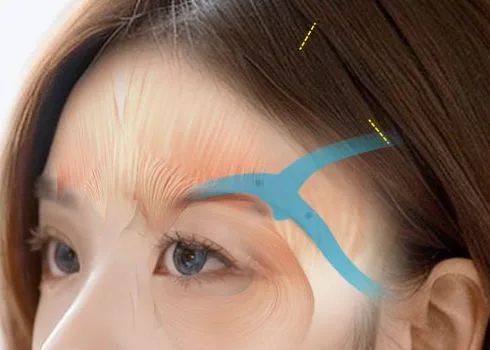
For very severe forehead lines, the underlying frontalis muscle may be divided. However, preservation is the principle because this muscle raises the forehead and eyebrows. Elevating brow position removes unnecessary compensatory brow elevation and improves forehead lines.
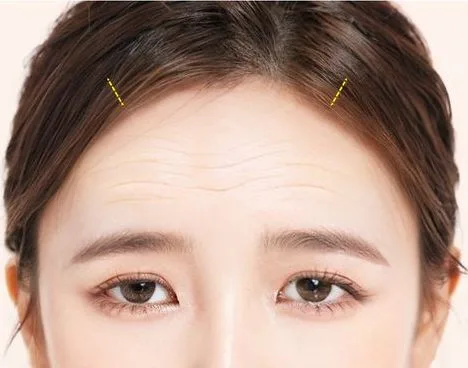
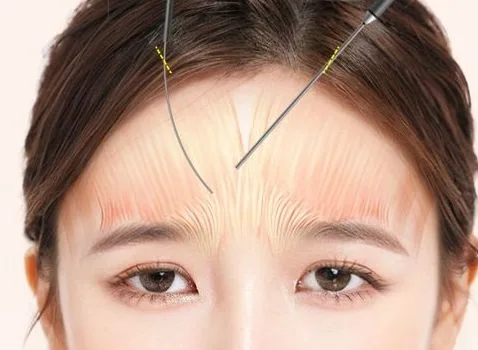
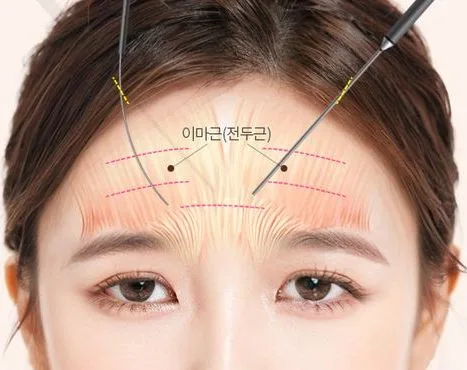

The inner brow is positioned by adjusting the degree of muscle weakening; the outer brow is positioned by releasing and lifting the ligaments and septal tissues. The amount of lift on each side is adjusted, symmetry is checked, and the tissues are fixed.
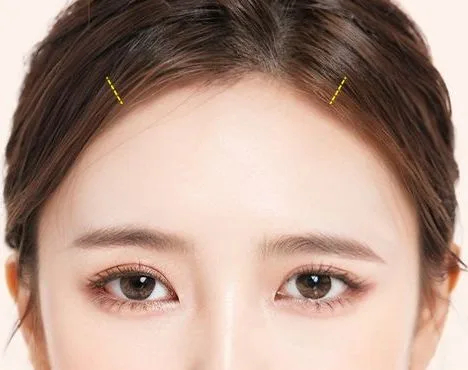
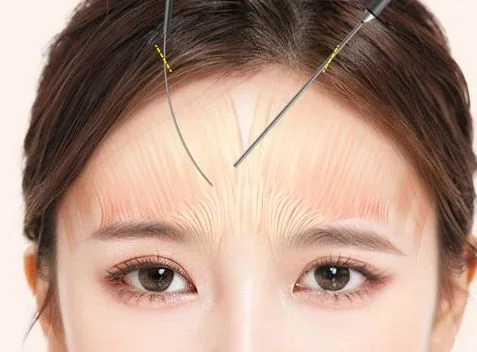
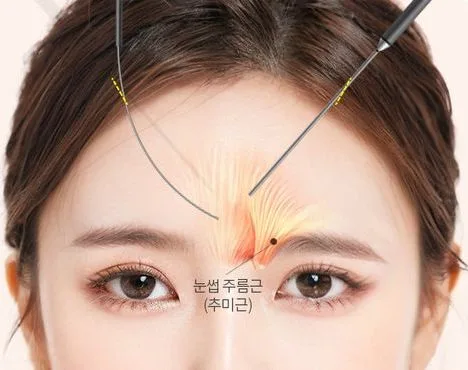
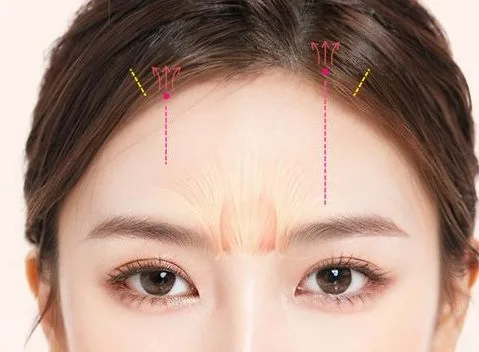
Forehead line depth and the degree of eyebrow and eyelid drooping vary between individuals. Surgery requires 2~4 incision sites, depending on skin elasticity and the extent of sagging. What matters is choosing the number appropriate to the concern.
Bone tunneling creates small passages in the outer cortical bone of the skull, just large enough for sutures. Passing sutures through them secures forehead and scalp tissue to bone. No plate-type fixation device such as Endotine is inserted.
Avoiding a fixation device does not automatically make the method safer or better. Bone tunneling can also cause temporary firmness, tightness, tenderness, or sensory changes after surgery, and it is not applied identically to every patient.
| Intraoperative Decision | Reason |
|---|---|
| Bone Tunnel Position | Must match the required direction of eyebrow elevation. |
| Extent of Dissection | Must allow the tissues to move upward without undue strain. |
| Suture Position | A site that securely holds the repositioned tissue must be selected. |
| Direction of Pull | Varies according to the pattern of eyebrow drooping. |
| Tension on Each Side | Accounts for preexisting eyebrow asymmetry and differences in muscle use. |
| Final Fixation Position | Avoids excessive elevation and an unnatural eyebrow shape. |
Durability does not depend on the bone tunnel alone. The plane and extent of dissection, direction of tissue movement, suture position and tension, postoperative reattachment and healing, and individual aging all play a role.
A 2025 literature review covering 2,519 patients also found that multiple fixation methods were used, without concluding that one was universally superior. Planning fixation points to match the location and direction of brow descent matters more than the name of the device.
The aim of a brow lift is to move tissue to a position suited to facial proportions while improving heaviness caused by drooping, rather than to raise the eyebrows as high as possible.
If the outer brow has descended substantially, lifting the inner and outer brow equally can create a surprised appearance. Particular attention is paid to excessive inner brow elevation and an eyebrow peak positioned too far inward.
Overcorrection is difficult to judge immediately after surgery. Swelling and other tissue changes can make the early appearance differ from the final result.
Age alone does not determine eligibility. Examination can assess suitability when eyebrows are naturally low, eyebrow and forehead soft tissues cover the upper eyelids, or the frontalis is used excessively to open the eyes.
However, deciding solely because the eye-to-brow distance is short or the patient wants larger-looking eyes requires caution. Heaviness above the eyes can have various causes, including ptosis, upper eyelid skin and fat, and skeletal and soft-tissue characteristics.
Depending on the individual and surgical method, the following problems can occur.
Because high blood pressure increases bleeding, factors that raise it are addressed before entry to the operating room, and surgery is performed under controlled low blood pressure. Approximately 20-fold endoscopic magnification and electrosurgical equipment are used to control bleeding, reducing postoperative swelling and pain.
Endoscopy is also used for zygoma reduction, foreign material removal, and brow bone contouring, often performed together with a brow lift.
Time off depends on your occupation. Office workers generally need about 7 days, depending on recovery. If bruising occurs, it may take around 14 days to resolve.
Forehead and facial massage should be avoided for 6 weeks.
Swelling, tenderness, and numbness during the first 6 weeks are part of normal healing. Some reduced sensation resolves within 6 months, but it may persist for 1~2 years. Itching or tingling can occur during recovery.
No. It does not enlarge the eyes themselves. Repositioning the eyebrows changes their relationship to the upper eyelids, exposing more of the eye area and potentially making the eyes appear larger.
Not every hooded appearance requires the same operation. Low eyebrows that bring upper eyelid skin downward require a different approach from problems involving upper eyelid skin, fat, or levator muscle function. These are evaluated together with the brows and forehead relaxed.
Revision is not inevitable. Aging continues after surgery, however, and the eyebrows may partially descend again depending on tissue condition. Revision is judged by the degree of recurrent descent and the current tissues, rather than elapsed time alone.
There is insufficient evidence to say one method is better for every patient. Bone tunneling uses cortical bone tunnels and sutures, whereas Endotine uses an absorbable fixation device. The choice depends on the direction of brow descent, scalp and periosteal condition, bone thickness, previous surgery, and required movement.
Endoscopy helps directly identify nerves, blood vessels, and fascial boundaries through a narrow passage, but does not eliminate risk. The correct anatomical plane, instrument angle and force, degree of adhesion, extent of surgery, and surgical experience all matter.
View each paper's population, methods, results, and limitations
| Timing | Typical Course |
|---|---|
| 1 Week After Surgery | Office workers usually return around this time. If bruising occurs, it takes about 2 weeks. |
| Up to 6 Weeks After Surgery | Swelling, tenderness when pressed, and numbness may continue during this normal recovery period. Avoid forehead and facial massage. |
| 6 Months After Surgery | Most reduced sensation returns around this time. |
| 1~2 Years | Some sensory changes can continue this long, and itching or tingling may occur during recovery. |
Recovery varies with the individual and the extent of surgery.
Gangnam Unni review · February 2024
I consulted Dr. Jung Su Lee at UVOM about a brow lift and had the surgery. He is so well known in this field that I trusted him, booked as soon as I arrived, and went ahead with surgery.
Gangnam Unni review · February 2023
Before surgery, I habitually used my forehead to open my eyes. I have genetically deep horizontal forehead lines and had Botox regularly. As I grew older, I developed resistance to Botox and the wrinkles worsened. Even after ptosis surgery, my drooping eyelids completely covered my eyelid creases, so I raised my eyebrows even more. Today is day 28 after surgery. The swelling seems to be gone and the forehead scars are barely visible. The drawbacks are that I am middle-aged with a lot of gray hair but still cannot dye it, and I am a little worried because my hair has thinned quite a bit at the crown. The asymmetry was corrected well, but my eyes were uneven to begin with, so the eyelid creases are also uneven. After recovery, I plan to have revision eyelid surgery and surgery at the outer corners of my eyes. The brow lift was very difficult and painful, but I am satisfied and just hope it lasts a long time.
Gangnam Unni review · February 2023
It has been one week since surgery and about 30~40% of the swelling remains. I like that my hidden eyelid creases now show and my eyes look larger. I had the brow lift because my expression lines were severe. They were invisible at rest but became very deep when I raised my eyebrows or frowned. Now neither my forehead nor the bridge of my nose wrinkles. My forehead is a little wider, though, and still numb; I think the feeling will return with time. The doctor seemed skilled and trustworthy, so I booked immediately without going elsewhere. I was disappointed by the staff's manner and the aftercare.
Reviews originally posted on Gangnam Unni are reproduced with the authors' consent. Each describes one person's experience; results vary between individuals.
Questions answered directly by Dr. Jung Su Lee in his doctor columns.
Age alone does not determine eligibility for surgery.
However, age-related brow drooping is often not pronounced in younger people such as those in their 20s. Brow position, eyelid anatomy, and compensatory frontalis activity should first be assessed to determine whether there is a problem that a forehead lift should address.
Even if the upper-eye area looks heavy, another treatment may be more appropriate when the cause is ptosis or an eyelid problem.
Answered by Dr. Jung Su Lee · Can people in their 20s and 30s have an endoscopic forehead lift? Assessment in younger patients
Low eyebrows mean that the eyebrows and surrounding tissues sit lower and appear to cover the upper eyelids.
Ptosis means that the upper-eyelid margin itself sits lower because eyelid elevation is insufficient. Both conditions may coexist.
Accurate distinction requires assessment of eyelid height, levator function, and brow position with the brows and forehead relaxed.
Answered by Dr. Jung Su Lee · Can people in their 20s and 30s have an endoscopic forehead lift? Assessment in younger patients
Not every hooded appearance requires the same operation.
The approach may differ between low brows pulling upper-eyelid skin downward and problems involving the eyelid's own skin, fat, or levator function.
The appropriate method should be determined after assessing brow position and eyelid function with the brows and forehead relaxed.
Answered by Dr. Jung Su Lee · Can people in their 20s and 30s have an endoscopic forehead lift? Assessment in younger patients
Revision is not inevitable.
However, natural aging continues and some brow descent may recur depending on the individual's skin and soft tissue.
The decision is not based solely on age at the first operation or elapsed time. It should follow assessment of recurrent descent, current tissue condition, and personal discomfort.
Answered by Dr. Jung Su Lee · Can people in their 20s and 30s have an endoscopic forehead lift? Assessment in younger patients
Whether lifting the eyebrows changes upper eyelid hooding or heaviness can inform the examination.
However, trying this at home alone cannot establish a need for a forehead lift.
Excessive manual elevation may produce changes that differ from the position actually planned for surgery.
Brow and eyelid positions and eye-opening function should be evaluated together with the brows comfortably lowered.
In younger patients, identifying the cause matters more than age
People in their 20s and 30s with naturally low brows or low outer brows and excessive frontalis use when opening their eyes may be assessed for an endoscopic forehead lift.
However, a heavy upper-eye appearance has many possible causes, including brow position, ptosis, upper-eyelid skin and fat, and skeletal and soft-tissue characteristics.
Youth alone need not exclude surgery, but deciding solely because the eye-to-brow distance is short or the patient wants larger-looking eyes also requires caution.
The decision should follow careful identification of the cause, which brow areas need adjustment and in what direction and degree for a natural appearance, and the anticipated changes and limitations.
If you have low brows or a heavy upper-eye appearance at a young age and find eye opening uncomfortable because of frequent forehead effort, you can arrange a consultation with UVOM Plastic Surgery at 02-545-3700 or via "UVOM Plastic Surgery" on KakaoTalk.
Answered by Dr. Jung Su Lee · Can people in their 20s and 30s have an endoscopic forehead lift? Assessment in younger patients
No. A brow lift does not enlarge the eyes themselves. However, changing brow position alters the relationship between the eyebrows and upper eyelids, exposing more of the eye area and potentially making the eyes appear larger.
Answered by Dr. Jung Su Lee · Why can the eyes look surprised after a brow lift?
Overcorrection is difficult to judge immediately after surgery.
Swelling and other tissue changes early in recovery may differ from the final appearance. Progress should be assessed in light of the technique and current stage of recovery.
Answered by Dr. Jung Su Lee · Why can the eyes look surprised after a brow lift?
Not necessarily. Excessive eyebrow elevation can instead create an unnatural or surprised appearance.
Answered by Dr. Jung Su Lee · Why can the eyes look surprised after a brow lift?
Yes. An anatomical study of the forehead's retaining structures describes an association between excessive inner brow elevation and a surprised look.
Answered by Dr. Jung Su Lee · Why can the eyes look surprised after a brow lift?
Yes. Both overall eyebrow height and peak position affect expression. Publications describe a surprised appearance when the peak is positioned too far inward.
Answered by Dr. Jung Su Lee · Why can the eyes look surprised after a brow lift?
Yes. Preexisting differences between the sides should also be considered, and postoperative eyebrow asymmetry is among the problems reported in brow lift literature.
Answered by Dr. Jung Su Lee · Why can the eyes look surprised after a brow lift?
A surprised appearance alone does not determine whether revision is needed.
The need for correction should be decided after directly assessing the time since surgery, surgical and fixation techniques, current brow position and shape, asymmetry, and the relationship between the brows and upper eyelids.
Answered by Dr. Jung Su Lee · Why can the eyes look surprised after a brow lift?
No. Bone tunneling generally creates small tunnels in the outer cortical bone of the skull, just large enough for sutures to pass through.
It does not remove a large amount of bone or create large holes through the full thickness of the skull.
Because it involves forming bone tunnels, their position, angle, and depth must be planned precisely.
Answered by Dr. Jung Su Lee · What Is Bone Tunnel Fixation in a Brow Lift?
Bone tunneling, which creates small tunnels in the outer cortical bone of the skull, has been used for many years.
Although generally performed within safe anatomical limits, the technique forms bone tunnels and therefore requires precise control of position, angle, and depth.
In particular, tunnels must remain within safe limits of the outer cortical bone to avoid structures inside the skull.
Surrounding bone tissue may undergo healing after surgery, but healing patterns vary between individuals.
Answered by Dr. Jung Su Lee · What Is Bone Tunnel Fixation in a Brow Lift?
Not necessarily.
Bone tunneling uses the skull's outer cortical bone as an anchor and sutures to hold forehead and scalp tissues in place.
The absence of a separate plate-type device therefore does not necessarily mean weaker fixation.
However, brow lift durability is not determined by bone tunnel fixation alone.
The extent of dissection, direction of tissue movement, suture position and tension, tissue reattachment, and individual healing response all contribute.
Answered by Dr. Jung Su Lee · What Is Bone Tunnel Fixation in a Brow Lift?
Yes.
When eyebrow height or the direction of descent differs between sides, rather than pulling both sides identically,
it is important to adjust fixation position, suture direction, and tension to each side's condition.
However, eyebrow asymmetry can reflect various factors beyond skin and soft tissue, including the skeleton, forehead muscle use, and eyelid condition.
Bone tunneling does not completely eliminate every asymmetry. Preexisting differences and the achievable extent of correction should be carefully assessed.
Answered by Dr. Jung Su Lee · What Is Bone Tunnel Fixation in a Brow Lift?
It is difficult to say that one method is better for every patient.
Bone tunneling secures tissues using bone and sutures,
whereas Endotine uses a separate absorbable fixation device.
Bone tunneling does not use a plate-type fixation device,
while Endotine can support tissue over a relatively broad area.
The actual choice depends on forehead and eyebrow condition, skin and tissue thickness, bone anatomy, prior surgery, and the surgeon's technique.
Rather than judging outcomes by the name of the fixation method alone, it is important to also assess whether dissection is adequate and fixation is precisely planned.
Answered by Dr. Jung Su Lee · What Is Bone Tunnel Fixation in a Brow Lift?
Yes.
The surgeon must plan tunnel position, angle, and depth; which tissues the sutures engage; the direction of pull; and tension on each side.
This requires understanding the anatomy of the skull, forehead, and brow region and incorporating the direction of brow descent and extent of frontalis use into the surgical plan.
Simply pulling tissues hard without adequate dissection can cause excessive tension or an unnatural eyebrow shape. Dissection, movement, and fixation must therefore be balanced.
Preoperative diagnosis and planning may be even more important in revision surgery because adhesions and existing fixation also require assessment.
For further questions about brow lifts and bone tunnel fixation, contact UVOM Plastic Surgery at 02-545-3700 or
arrange a consultation with UVOM Plastic Surgery on KakaoTalk for an accurate assessment of your forehead and eyebrows.
Interested in other brow lift articles? ▼Select a title below▼
Why do eyelids look more droopy when the brows descend?
Double-eyelid surgery or a brow lift for drooping eyes? It depends on the cause.
Answered by Dr. Jung Su Lee · What Is Bone Tunnel Fixation in a Brow Lift?
Yes. However, the cause and extent of descent, forehead length and hairline, amount of eyelid skin, and any accompanying ptosis must be assessed before choosing the surgical method and extent of lift.
Answered by Dr. Jung Su Lee · Why do eyelids look more droopy when the brows descend?
Lax eyelid skin itself may improve, but if brow drooping has shortened the eye-to-brow distance, the heavy, hooded appearance may not improve sufficiently.
Improved vision can also reduce forehead muscle tension, making the eyebrows appear to droop further in some cases. It is therefore advisable to assess brow position as well.
Answered by Dr. Jung Su Lee · Why do eyelids look more droopy when the brows descend?
Not necessarily. If raising the eyebrows sufficiently reduces overlapping eyelid skin, a brow lift alone may be considered.
Conversely, accompanying eyelid skin laxity or ptosis may call for upper blepharoplasty or ptosis correction as well.
Answered by Dr. Jung Su Lee · Why do eyelids look more droopy when the brows descend?
As with other operations, scarring, temporary reduced sensation, hairline changes, and recurrent asymmetry are possible.
Risk varies with the incision method and individual condition, so a thorough explanation before deciding on surgery is important.
For further questions about brow lifts and eyebrow drooping, call 02-545-3700 or arrange a consultation with UVOM Plastic Surgery on KakaoTalk to establish the cause of your drooping eye appearance.
Answered by Dr. Jung Su Lee · Why do eyelids look more droopy when the brows descend?